
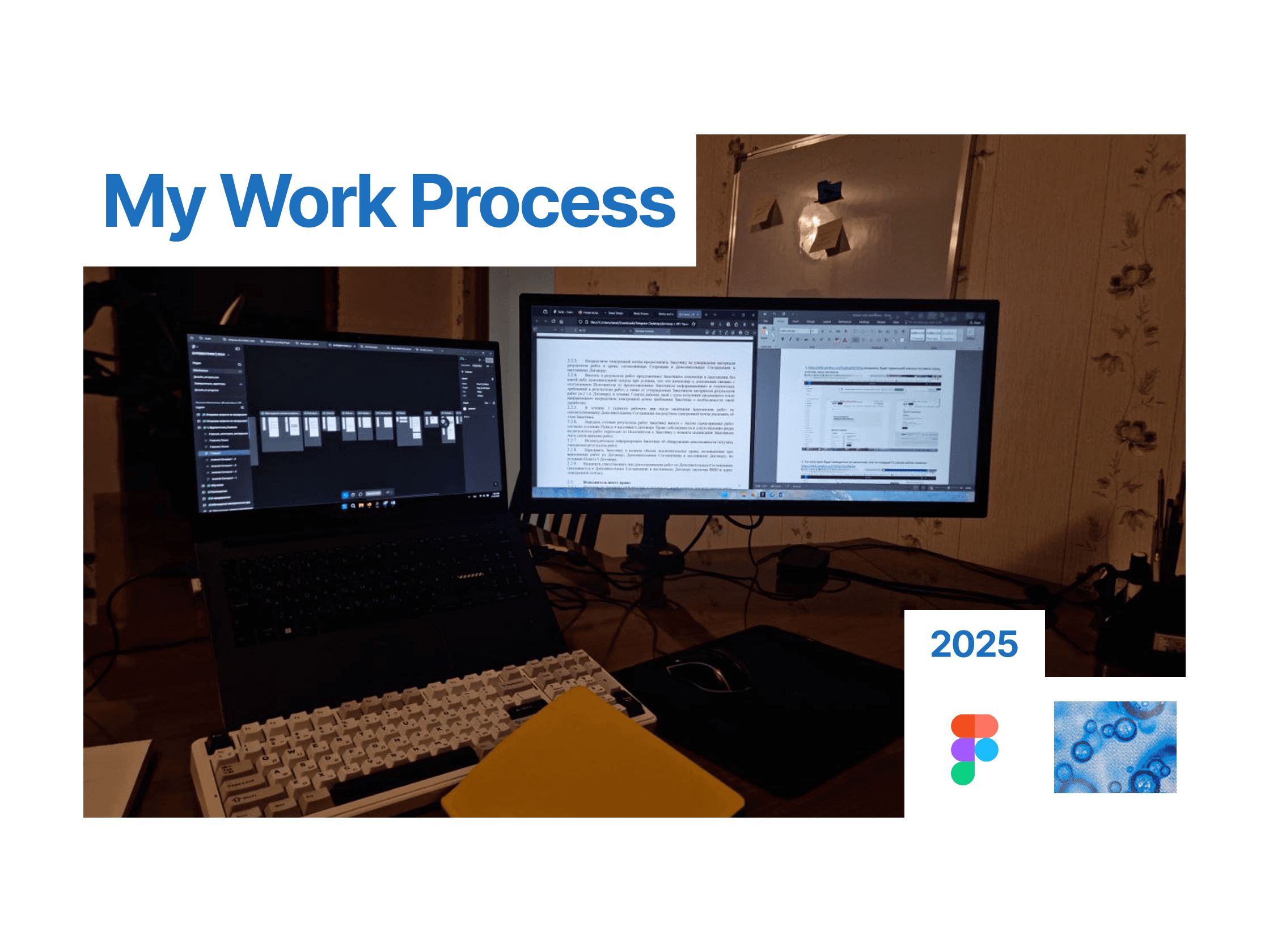
Every project I start begins with structure. Before opening any design tool, I build the foundation — this helps me stay aligned with the product’s direction and business goals.
The first thing I do is organize my workspace. I create a browser folder with bookmarks: competitor research, tools, references, and any useful resources related to the industry or user behavior. This becomes my knowledge base for the project.
Then I focus on documentation. I prepare the style guide, start shaping the design system, and create the brandbook if it’s not provided. I collect visual references — both direct and abstract — to define the direction for layout, mood, typography, and motion.
At this stage, I also dive into the business itself. I try to understand the brand's mood, voice, and positioning. I look at what the company wants to achieve and how that connects with user needs and expectations. Based on this, I shape a design strategy — combining brand identity, usability, and product goals. I usually present this strategic direction to the client before deep design work starts. It gives clarity and helps align everyone from the beginning.
Throughout the process, I often use ChatGPT to explore naming options, UX patterns, and content structure. I turn to Sora for motion and narrative experiments when needed. Midjourney helps me quickly generate visual references that support the concept or spark unexpected directions.
When I work, I like to go deep. I shut off devices, block notifications, and avoid distractions. I don’t like being interrupted during this phase — it’s when the core decisions are made, and that’s where the real value of the design process happens.
This approach helps me create design systems and interfaces that are not only beautiful but strategically sound — built to support the business and work for real users.
Go Back